


Best Fly Rod for Redfish: The Complete Redfish Fly Rod Setup Guide

Redfish are one of the most addictive species a fly angler can pursue. Few experiences compare to watching a copper back push through flooded grass, spotting a tail waving in the tide, or seeing a fish slide across a shallow flat with its back out of the water. The entire game is visual, deliberate, and often fast moving.
Most redfish are caught in shallow marsh environments where anglers must make quick, accurate casts to fish that may only be visible for a moment. The water is rarely calm. Wind pushes across open flats. Tides move water through grass and creeks. A fly must land softly but precisely, often only a few feet in front of a moving fish.
Because of this, the fly rod you choose matters more than many anglers realize. A rod that cannot manage wind, throw common redfish flies, or deliver quick accurate shots will quickly become frustrating in real marsh conditions.
After years of experimentation, most experienced anglers settle on one answer. The 8 weight fly rod for redfish offers the ideal balance of power, accuracy, and versatility for shallow water saltwater fishing.
This guide breaks down exactly what rod weight works best, how to build a proper redfish fly rod setup, and why the 8 weight has become the standard across nearly every coastal fishery.
What Rod Weight for Redfish
Choosing the correct rod weight is the foundation of any redfish fly fishing setup. While several rod weights can work, each has strengths and limitations depending on conditions.
7 Weight Fly Rod
A 7 weight fly rod can be an excellent choice when conditions are calm and flies are small. In protected marsh creeks or on quiet days with minimal wind, a lighter rod allows delicate presentations and can make smaller fish particularly fun to catch.
However, the limitations of a 7 weight quickly appear in typical coastal conditions. Wind can make casting difficult. Larger flies become harder to turn over. Long leaders and heavier tippet can also strain the rod’s ability to maintain tight loops.
For anglers who primarily fish sheltered water or extremely shallow flats, a 7 weight may work well. But it is often underpowered for everyday redfish fishing.
8 Weight Fly Rod
The 8 weight fly rod is widely considered the ideal rod weight for redfish. It provides the perfect balance of casting power and finesse needed for shallow water sight fishing.
An 8 weight can easily throw the most common redfish flies, including shrimp patterns, crab flies, and small baitfish imitations. It also provides enough backbone to handle coastal wind while maintaining accuracy at typical casting distances.
Most redfish are caught between 30 and 60 feet. Within this range, an 8 weight rod delivers smooth loop control and precise presentations while still having the power to push line when the wind comes up.
9 Weight Fly Rod
A 9 weight fly rod becomes useful when targeting larger fish, fishing open water, or dealing with heavy wind. It excels when throwing larger flies or when fishing areas where bull redfish may be present.
However, a 9 weight can feel slightly heavy for everyday marsh fishing. For anglers spending long days sight casting on shallow flats, the added weight can reduce casting comfort and finesse.
While a 9 weight certainly works for redfish, it is often more rod than most marsh scenarios require.
For these reasons, the 8 weight rod remains the most versatile option for redfish fly fishing.
Why the 8 Weight Fly Rod Dominates Redfish Fishing
The dominance of the 8 weight rod in redfish fishing comes down to how well it handles real marsh conditions.
See our Redfish Saltwater Fly Rod Guide
Redfish fishing is rarely about long distance casting. Instead, anglers must react quickly when a fish appears. A redfish may slide along a grass edge or push water along a bank, giving only a brief opportunity to make a presentation.
In these moments, the rod must deliver.
Power for Wind
Wind is a constant part of coastal fishing. An 8 weight generates the line speed needed to cut through wind while still maintaining control.
Accuracy at Short Distance
Most casts happen between 30 and 60 feet. The 8 weight excels at this distance, allowing anglers to deliver tight loops and accurate fly placement.
Ability to Throw Heavier Flies
Redfish flies often contain lead or bead chain eyes to help them sink quickly. These flies require a rod with enough power to turn them over cleanly.
Line Control for Quick Shots
A properly balanced 8 weight allows anglers to pick up line, make one or two false casts, and deliver the fly immediately.
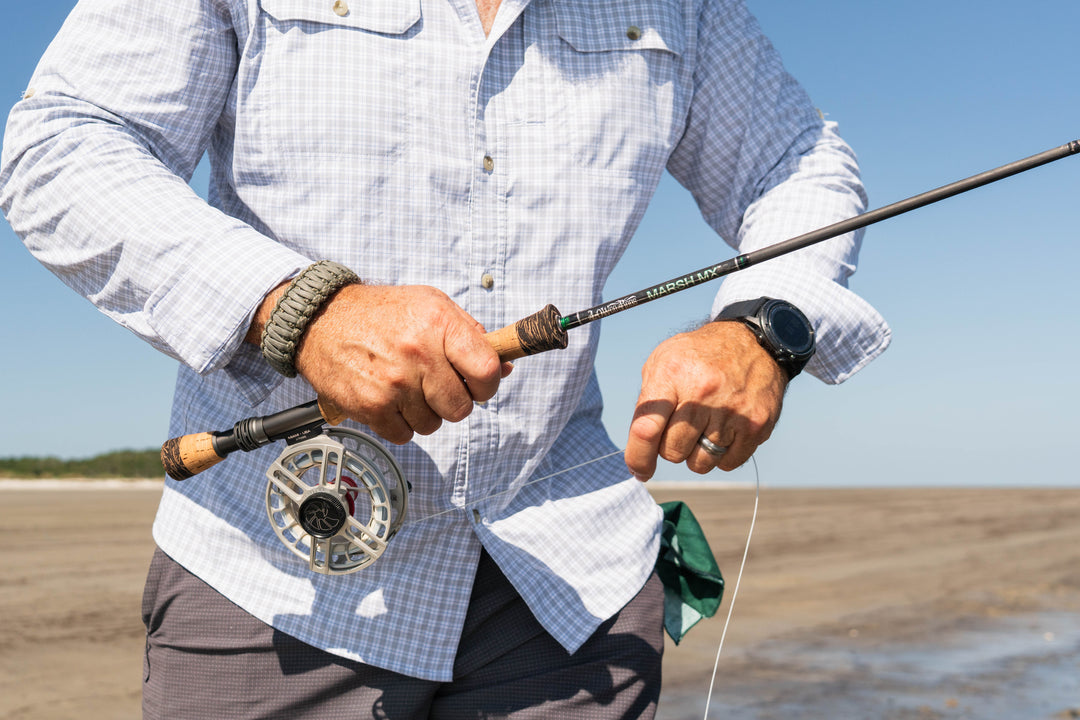
The Marsh MX 8 weight was designed specifically with these conditions in mind, offering the balance of power and feel needed for marsh fishing where quick accurate presentations matter most.

Wind in Marsh Environments
Wind is one of the defining challenges of redfish fly fishing. Coastal marsh systems rarely provide the shelter found in freshwater rivers or lakes. Instead, anglers often fish broad flats exposed to open water and moving tides.
Even moderate wind can dramatically change how a fly rod performs.
Coastal wind patterns are often steady and persistent. A calm morning may quickly turn into a breezy afternoon as sea breezes build. In shallow marsh environments, wind pushes water across open flats and funnels through grass channels.
Boat drift can add another layer of difficulty. When fishing from a skiff, anglers must often cast while the boat is slowly moving, adjusting timing and line control on the fly.
Because of these factors, a redfish rod must produce strong line speed and recover quickly after each cast. A rod that flexes too deeply or recovers slowly will struggle to maintain tight loops in windy conditions.
The added power of an 8 weight rod helps anglers punch through wind while still maintaining accuracy and control.
Casting Distance and Accuracy
One of the biggest misconceptions about redfish fly fishing is that long casts are required. In reality, success often depends on short, precise presentations.
Most redfish are spotted within a reasonable casting range. Tailing fish may appear only 40 feet away. Cruising fish might slide along a bank or edge within easy reach.
What matters most is accuracy.
A well placed fly should land roughly two feet ahead of the fish, allowing it to settle naturally before the fish reaches it. Too close and the fish may spook. Too far and the opportunity disappears.
Minimal false casting is also important. Redfish are extremely aware of movement above them. Excessive false casts can send shadows across the water and alert the fish.
A rod designed for quick line pickup and immediate delivery allows anglers to react quickly and present the fly with confidence.
Flies Used for Redfish
Redfish feed on a wide variety of prey including shrimp, crabs, baitfish, and small crustaceans. Because of this, many different fly patterns can be effective.
Some of the most common redfish flies include:
Clouser Minnow
One of the most versatile saltwater flies ever created. It imitates small baitfish and can be tied in a wide range of sizes and colors.
Kwan Fly
A highly effective shrimp imitation that lands softly and sinks naturally in shallow water.
Shrimp Patterns
Shrimp are a staple food source for redfish. Many anglers rely heavily on shrimp imitations when fish are feeding along grass edges or mud flats.
Crab Flies
Crab patterns work extremely well when redfish are feeding in shallow grass or around oyster beds.
Gold Spoon Flies
These flies imitate small baitfish and produce flash that can attract redfish from a distance.
Many of these flies contain bead chain or lead eyes to help them sink quickly. These added weights make a stronger rod necessary for turning the fly over cleanly. An 8 weight rod handles these flies easily while maintaining accurate presentations.
Recommended Redfish Fly Rod Setup
A well balanced redfish fly fishing setup includes several key components that work together.
Rod
This weight offers the ideal balance of power, accuracy, and versatility for marsh fishing.
Reel
A saltwater reel with a sealed drag system protects internal components from corrosion and provides smooth drag pressure when fighting strong fish.
Line
A weight forward floating fly line designed specifically for saltwater conditions helps load the rod quickly and deliver accurate casts.
Leader
A 9 foot tapered leader allows for smooth energy transfer from the fly line to the fly while maintaining natural presentation.
Tippet
Most anglers use 16 to 20 pound fluorocarbon tippet when targeting redfish. This strength offers abrasion resistance around oyster beds while still allowing natural movement of the fly.
Together, this setup creates a system capable of handling the wide variety of conditions encountered while redfish fly fishing.
Why the Marsh MX 8 Weight is Built for Redfish
The Marsh MX series was designed around the realities of coastal marsh fishing.
Sight fishing for redfish demands a rod capable of delivering quick accurate casts while still providing enough backbone to control fish in shallow water. The Marsh MX 8 weight was developed with these requirements at the forefront.
Key characteristics include fast recovery for tight loops in windy conditions, a strong butt section for lifting line and controlling fish, excellent tracking for accuracy, and a balanced swing weight that reduces fatigue during long days on the water.
Whether casting shrimp patterns along flooded grass or presenting a baitfish fly to a cruising fish along a bank, the rod maintains the control and power needed to perform consistently.
Explore the Marsh Mx 8 weight fly rod to see why it has become a trusted choice for anglers targeting redfish across coastal marsh fisheries.
Built quietly. Built for the salt.
Frequently Asked Questions
What weight fly rod is best for redfish
The 8 weight fly rod is widely considered the best choice for redfish. It offers enough power to handle coastal wind and larger flies while still maintaining the accuracy needed for short sight fishing casts. This balance makes it the most versatile rod weight for marsh fishing.
Can you catch redfish on a 7 weight fly rod
Yes, redfish can certainly be caught on a 7 weight rod, especially in calm conditions with smaller flies. However, wind and heavier flies often make casting more difficult with a lighter rod. Many anglers eventually move to an 8 weight for improved performance in typical coastal conditions.
Is a 9 weight too heavy for redfish
A 9 weight rod is not too heavy for redfish and can be useful in windy conditions or when targeting larger fish. However, it may feel heavier than necessary for everyday marsh fishing where shorter casts and smaller flies are common.
What flies work best for redfish
Some of the most effective flies for redfish include Clouser Minnows, Kwan flies, shrimp patterns, crab flies, and gold spoon flies. These flies imitate the primary food sources redfish feed on in shallow coastal environments.
What line should I use for redfish
Most anglers prefer a weight forward floating saltwater fly line when targeting redfish. This type of line loads the rod quickly and allows anglers to make accurate casts at typical redfish fishing distances.


Leave a comment